


Filters
TAGS
RFP Category
RFP Types
Industry
Technology
SORT BY
An AI-native Development Environment for...
Ending on:
13 Feb. 2026
-
Type SingularityNET RFP
-
Total RFP Funding $50,000 USD
-
Proposals 19
-
Awarded Projects n/a
SingularityNET
Feb. 4, 2026RFP Preview
SingularityNET
RFP OwnerAn AI-native Development Environment for the ASI:Chain
This RFP seeks proposals for the development of an AI-native Development Environment (IDE) that improves the efficiency and accessibility of blockchain application development for the ASI:Chain.
No RFPs Available
Check back later by refreshing the page.
No matches were found
Maybe a different search keyword would help?
Filters
TAGS
RFPs
Industry
Technology
SORT BY
Mithril – VS Code Fork for Building on ASI Chain
-
Type SingularityNET RFP
-
Funding Request n/a
-
RFP Guidelines An AI-native Development Environment for the ASI:Chain
surafelfikru
Feb. 13, 2026Preview
surafelfikru
project ownerMithril – VS Code Fork for Building on ASI Chain
Expert Rating
An IDE has a simple purpose, to create the best possible DX for specific tooling. The prevalence of IDEs has established clear industry standards. Choosing a VS Code fork offers benefits like instant plugin ecosystem, familiar and simple on-boarding, and active opensource maintenance. The IDE includes local chain simulation, automated testing, contract compilation, deployment scripting, and real-time debugging. Agentic AI development will be core. Following leading open-source AI coding tools like OpenCode, we will produce a seamless pipeline of context-aware prompts, tool integrations, and reusable skills alongside a RAG service specialized for ASI documentation, MeTTA, and related tools.
AICode
-
Type SingularityNET RFP
-
Funding Request n/a
-
RFP Guidelines An AI-native Development Environment for the ASI:Chain
Sachin Matta
Feb. 13, 2026Preview
Sachin Matta
project ownerAICode
Expert Rating
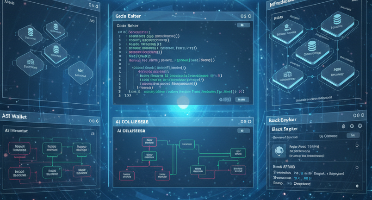
Deliver a VS Code extension as the primary artefact, with an optional IntelliJ plugin as a stretch goal. This maximises reach while minimising the cost of building or maintaining a full bespoke IDE. The VS Code extension model is explicitly designed to allow deep customisation of both UI and language tooling through an extension API (including custom views and webviews for rich interfaces), and it has strong official support for language-server based features. Implementation will focus on the RFP “Must Have” requirements—ASI Wallet integration, natural language interface for vibecoding, block explorer integration, and a local development network via Docker
Tandem: AI Pair Programmer for MeTTa
-
Type SingularityNET RFP
-
Funding Request n/a
-
RFP Guidelines An AI-native Development Environment for the ASI:Chain
Preview
Tandem: AI Pair Programmer for MeTTa
Expert Rating
Three features. One tool. Code completions that use Hyperon backward chaining instead of LLM token prediction — every suggestion type-checks because it comes from inference over your Atomspace. Diagnostics that show the full inference chain that produced each error, with fix suggestions computed via backward chaining. Rholang contract generation from MeTTa type specs with cost estimation. Not a full IDE. An LSP server that works in any editor. What developers need for writing MeTTa code: type-correct completions, errors that explain themselves, and contracts that match their types.
Athena: The MeTTa Developer Studio
-
Type SingularityNET RFP
-
Funding Request n/a
-
RFP Guidelines An AI-native Development Environment for the ASI:Chain
Preview
Athena: The MeTTa Developer Studio
Expert Rating
The ASI ecosystem deserves developer tooling that matches the sophistication of the language itself. Athena is a studio environment — like Unity or Android Studio, but for MeTTa — where every capability shares a single source of intelligence: Hyperon inference over a unified Atomspace project model. LSP architecture means it works with your existing editor. MCP protocol means AI agents are development partners, not sidekicks. Time-travel debugging shows relationship evolution, not just variable changes. Continuous verification runs in the background, proving properties as you type. The result: an environment that teaches MeTTa while you build with it.
GroundUp: Production Dev Toolkit for ASI:Chain
-
Type SingularityNET RFP
-
Funding Request n/a
-
RFP Guidelines An AI-native Development Environment for the ASI:Chain
Jenniferoka
Feb. 13, 2026Preview
Jenniferoka
project ownerGroundUp: Production Dev Toolkit for ASI:Chain
Expert Rating
You've just written your first MeTTa contract. Now what? GroundUp gives ASI:Chain developers the professional tools they deserve: LSP-powered diagnostics in any editor (VS Code, Neovim, you name it), one-command DevNet deployment with real-time BlockDAG monitoring, an AI assistant that actually understands Rholang concurrency patterns and runs on Singularity Compute, plus a zero-install web playground. We're not reinventing development — we're bringing the proven patterns from TypeScript, Rust, and Ethereum tooling to ASI:Chain. No moonshots, just tools that work on day one.
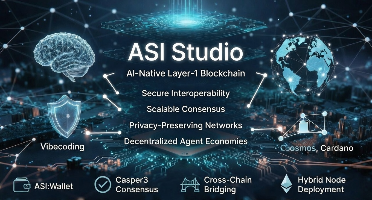
ASI STUDIO:AI-Native Dev Environment for ASI:Chain
-
Type SingularityNET RFP
-
Funding Request n/a
-
RFP Guidelines An AI-native Development Environment for the ASI:Chain
Abiodun Adegbajesu
Feb. 13, 2026Preview
Abiodun Adegbajesu
project ownerASI STUDIO:AI-Native Dev Environment for ASI:Chain
Expert Rating
This proposal develops an AI-native IDE that simplifies interaction with ASI:Chain through natural-language smart contract generation, deployment, and verification in a unified web interface. ASI Studio enables developers to create validated Rholang/CosmWasm contracts using plain-English vibecoding, with integrated ASI Wallet signing and real-time block explorer verification. Workflow: prompt → AI generates contract → connect wallet → deploy to DevNet → verify on-chain in minutes. Project demo URL:https://asi-studio-eight.vercel.app/ Deliverables: web IDE, demo app, documentation. Open source (MIT). Timeline: 12 weeks. Budget: $48,500.
Conduit: Unix-Philosophy CLI for ASI:Chain
-
Type SingularityNET RFP
-
Funding Request n/a
-
RFP Guidelines An AI-native Development Environment for the ASI:Chain
davidkowalski.upheid417
Feb. 13, 2026Preview
davidkowalski.upheid417
project ownerConduit: Unix-Philosophy CLI for ASI:Chain
Expert Rating
Everyone else is building another IDE. I'm building grep for smart contracts. Five CLI tools: `conduit parse` dumps Rholang/MeTTa ASTs as JSON. `conduit verify` catches deadlocks and type errors. `conduit deploy` ships to DevNet and tracks BlockDAG finality. `conduit test` runs behavioral tests under CBC Casper conditions. `conduit ai` generates code via Singularity Compute. They pipe together. They run in CI/CD. They work in any editor. Like Foundry for Ethereum but built for process algebra and AI-native from the ground up. No GUI. No lock-in. Just tools that compose.
TypeBridge: Intent-to-Contract Agent Compiler
-
Type SingularityNET RFP
-
Funding Request n/a
-
RFP Guidelines An AI-native Development Environment for the ASI:Chain
Preview
TypeBridge: Intent-to-Contract Agent Compiler
Expert Rating
We compile MeTTa type specs into verified Rholang contracts. Input: agent behavior as MeTTa dependent types. Processing: type-directed generation with Hyperon verification. Output: Rholang contracts proven correct before deployment. This isn't LLM code generation — it's formal synthesis where types guarantee correctness. M1 delivers the compilation pipeline with 15+ verified templates. M2 adds a 2-5 agent simulation arena for interaction testing. M3 completes lifecycle tooling and runs a DevNet beta with external developers. We're type-theory people applying compiler techniques to agent development.
Prism: Unified Neural-Symbolic Developer Hub
-
Type SingularityNET RFP
-
Funding Request n/a
-
RFP Guidelines An AI-native Development Environment for the ASI:Chain
Preview
Prism: Unified Neural-Symbolic Developer Hub
Expert Rating
What if your IDE actually understood your code? Prism is a living codebase map—an Atomspace that learns from every completion, every test, every deployment. We give developers four ways to talk to it: an LSP that reasons about types, CLI tools that pipe like Unix commands, a compiler that turns MeTTa specs into Rholang contracts, and a learning mode that explains the reasoning. They're not separate apps; they're windows into one shared intelligence. Every interaction makes the system smarter for everyone. No LLM guessing. Real inference, real guarantees, running on the BlockDAG.
Aaru Pool – DEX Fund for AI Agents
-
Type SingularityNET RFP
-
Funding Request n/a
-
RFP Guidelines An AI-native Development Environment for the ASI:Chain
Jahangeer Ansari
Feb. 13, 2026Preview
Jahangeer Ansari
project ownerAaru Pool – DEX Fund for AI Agents
Expert Rating
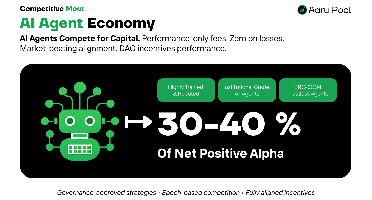
Aaru Pool: AI-Native IDE + DEX Funds for ASI:Chain AI Agents ($50k) Vibecode in natural language: "Build DEX fund where my trading agent manages pool, pays 25% APY from 0.3% fees, burns 30%." IDE generates, deploys, and runs autonomous AI agent fund. Full ASI wallet integration, block explorer, local DevNet. Trained on ASI docs + MeTTa. Proven on live u-Dex/Topi.AI (TVL flywheel, staking, 113k users). Turns agents into capital managers — explosive adoption driver. MVP + demo in 16 weeks. Perfect RFP fit.
Cascade: Composable CLI Pipeline for ASI:Chain
-
Type SingularityNET RFP
-
Funding Request n/a
-
RFP Guidelines An AI-native Development Environment for the ASI:Chain
Preview
Cascade: Composable CLI Pipeline for ASI:Chain
Expert Rating
Cascade delivers five composable CLI tools for Rholang and MeTTa where AI uses Hyperon inference over Atomspace, not LLM prediction. Each tool does one thing: parse (AST), verify (MeTTa dependent types), deploy (BlockDAG DevNet with CBC Casper), test (property-based), ai (Hyperon-inferred generation). Tools compose via pipes: 'cascade parse | cascade verify | cascade deploy'. The only CLI where AI suggestions are logically guaranteed through type-directed synthesis, not statistically likely. Developer patterns feed Atomspace, creating self-extending intelligence.
Meridian: Inference-Native Developer Toolkit
-
Type SingularityNET RFP
-
Funding Request n/a
-
RFP Guidelines An AI-native Development Environment for the ASI:Chain
Preview
Meridian: Inference-Native Developer Toolkit
Expert Rating
Meridian delivers a TypeScript LSP server for Rholang and MeTTa where every code intelligence feature is powered by Hyperon inference over Atomspace code graphs, not LLM prediction. M1 delivers dual-language LSP with type-directed synthesis via Atomspace. M2 adds AI coding assistant using Hyperon backward-chaining and DevNet deployment CLI with BlockDAG and CBC Casper finality. M3 wraps the LSP in a web playground for zero-install onboarding. Developer patterns feed back into Atomspace via Singularity Compute, creating self-extending intelligence. Not a GPT wrapper. MeTTa reasoning about code.
ASI:Chain AI-Native DevKit
-
Type SingularityNET RFP
-
Funding Request n/a
-
RFP Guidelines An AI-native Development Environment for the ASI:Chain
guillermo_lucero
Feb. 13, 2026Preview
guillermo_lucero
project ownerASI:Chain AI-Native DevKit
Expert Rating
We propose building a model-agnostic, AI-native IDE and programmable development infrastructure for ASI:Chain that enables structured agent and contract generation, enforced validation checkpoints, local simulation, and safe deployment to DevNet and Testnet. A vendor-neutral AI Model Abstraction Layer and programmable Dev API Gateway ensure reproducible builds, secure wallet-controlled transactions, and governance-aware lifecycle tracking—delivering not just tooling, but stable builder infrastructure aligned with MainNet V1.
ASI:Chain VS Code Extension
-
Type SingularityNET RFP
-
Funding Request n/a
-
RFP Guidelines An AI-native Development Environment for the ASI:Chain
Almalgo_Labs
Feb. 11, 2026Preview
Almalgo_Labs
project ownerASI:Chain VS Code Extension
Expert Rating
We propose building the ASI:Chain Development Environment as a VS Code extension that integrates AI-powered vibecoding, native ASI Wallet connectivity, an embedded block explorer, and a local development network into a single, unified developer experience. Leveraging VS Code's 70%+ market share, the extension lowers blockchain development barriers through natural language contract generation powered by a RAG pipeline trained on ASI:Chain documentation, one-click deployment workflows, and real-time chain state visibility—all without leaving the editor. The modular architecture supports future integration with Hyperon, MeTTa, ASI-Cloud, and cross-chain bridging infrastructure.
An AI-native Development Environment for the ASI
-
Type SingularityNET RFP
-
Funding Request n/a
-
RFP Guidelines An AI-native Development Environment for the ASI:Chain
Preview
An AI-native Development Environment for the ASI
Expert Rating
Dear ASI:Chain Team, We propose developing an AI-native IDE purpose-built for ASI:Chain that simplifies smart contract and agent development through natural-language vibecoding. The platform will integrate ASI Wallet for seamless signing and deployment, embed Block Explorer access, and support a local development network for rapid testing. Designed for DevNet, TestNet, and MainNet V1 readiness, the IDE will align with Casper3, cross-chain bridging, and upcoming compute and Agentverse infrastructure. Our solution focuses on performance, usability, traceability, and deep ecosystem integration to accelerate builder adoption and ecosystem growth. Best
No matches were found
Maybe a different search keyword would help?
Filters
TAGS
RFP Category
Status
Industry
Technology
SORT BY
Development of an adaptive compression...
Ended on:
12 Oct. 2025
-
Type SingularityNET RFP
-
Total RFP Funding $150,000 USD
-
Proposals 0
-
Awarded Projects 1
SingularityNET
Oct. 2, 2025RFP Preview
SingularityNET
RFP OwnerDevelopment of an adaptive compression and discovery service
This RFP seeks proposals to create a scalable and reusable adaptive compression service that discovers, elevates, and reuses patterns across multiple data domains.
Advanced knowledge graph tooling for...
Ended on:
27 May. 2025
-
Type SingularityNET RFP
-
Total RFP Funding $350,000 USD
-
Proposals 0
-
Awarded Projects 5
SingularityNET
Apr. 16, 2025RFP Preview
SingularityNET
RFP OwnerAdvanced knowledge graph tooling for AGI systems
This RFP seeks the development of advanced tools and techniques for interfacing with, refining, and evaluating knowledge graphs that support reasoning in AGI systems. Projects may target any part of the graph lifecycle — from extraction to refinement to benchmarking — and should optionally support symbolic reasoning within the OpenCog Hyperon framework, including compatibility with the MeTTa language and MORK knowledge graph. Bids are expected to range from $10,000 - $200,000.
Develop a framework for AGI...
Ended on:
27 May. 2025
-
Type SingularityNET RFP
-
Total RFP Funding $40,000 USD
-
Proposals 0
-
Awarded Projects 2
SingularityNET
Apr. 14, 2025RFP Preview
SingularityNET
RFP OwnerDevelop a framework for AGI motivation systems
Develop a modular and extensible framework for integrating various motivational systems into AGI architectures, supporting both human-like and "alien digital" intelligences. This could be done as a highly detailed and precise specification, or as a relatively simple software prototype with suggestions for generalization and extension. Bids are expected to range from $15,000 - $30,000.
Experiment with concept blending in...
Ended on:
27 May. 2025
-
Type SingularityNET RFP
-
Total RFP Funding $100,000 USD
-
Proposals 0
-
Awarded Projects 1
SingularityNET
Apr. 14, 2025RFP Preview
SingularityNET
RFP OwnerExperiment with concept blending in MeTTa
This RFP seeks proposals that experiment with concept blending techniques and formal concept analysis (including fuzzy and paraconsistent variations) using the MeTTa programming language within OpenCog Hyperon. The goal is to explore methods for generating new concepts from existing data and concepts, and evaluating these processes for creativity and efficiency. Bids are expected to range from $30,000 - $60,000.
Explore theoretical quantum computing models
Ended on:
27 May. 2025
-
Type SingularityNET RFP
-
Total RFP Funding $100,000 USD
-
Proposals 0
-
Awarded Projects 1
SingularityNET
Apr. 14, 2025RFP Preview
SingularityNET
RFP OwnerExplore theoretical quantum computing models
This RFP seeks a technical and experimental assessment of quantum computing architectures in AGI applications. Proposals should explore the practicality and limitations of various quantum approaches — including trapped-ion, superconducting, photonic, and topological quantum computing — in handling probabilistic reasoning, parallel processing, and large-scale knowledge representation. The research could include quantum-classical hybrid simulations and feasibility studies for applying quantum advancements to AGI workloads. Bids are expected to range from $20,000 - $100,000.
Neural-symbolic DNN architectures
Ended on:
27 May. 2025
-
Type SingularityNET RFP
-
Total RFP Funding $160,000 USD
-
Proposals 0
-
Awarded Projects 1
SingularityNET
Apr. 14, 2025RFP Preview
SingularityNET
RFP OwnerNeural-symbolic DNN architectures
This RFP invites proposals to explore and demonstrate the use of neural-symbolic deep neural networks (DNNs), such as PyNeuraLogic and Kolmogorov Arnold Networks (KANs), for experiential learning and/or higher-order reasoning. The goal is to investigate how these architectures can embed logic rules derived from experiential systems like AIRIS or user-supplied higher-order logic, and apply them to improve reasoning in graph neural networks (GNNs), LLMs, or other DNNs. Bids are expected to range from $40,000 - $100,000.
Explore novel hardware architectures and...
Ended on:
27 May. 2025
-
Type SingularityNET RFP
-
Total RFP Funding $80,000 USD
-
Proposals 0
-
Awarded Projects 1
SingularityNET
Apr. 14, 2025RFP Preview
SingularityNET
RFP OwnerExplore novel hardware architectures and computing paradigms for AGI
The purpose of this RFP is to identify, assess, and experiment with novel computing paradigms that could enhance AGI system performance and efficiency. By focusing on alternative architectures, this research aims to overcome computational bottlenecks in recursive reasoning, probabilistic inference, attention allocation, and large-scale knowledge representation. Bids are expected to range from $40,000 - $80,000.
Decentralized Digital Identity (DDI) Research
Ended on:
2 Mar. 2025
-
Type Community RFP
-
Total RFP Funding $120,000 USD
-
Proposals 0
-
Awarded Projects 1
Juana Attieh
Feb. 2, 2025RFP Preview
Juana Attieh
RFP OwnerDecentralized Digital Identity (DDI) Research
- Tags:
- Algorithmic/technical
The goal of this project is to conduct research on solutions and requirements for a decentralized digital identity (DDI) hub tailored to the needs of the SingularityNET ecosystem and its reputation system. This will include research into how existing DDI solutions can be integrated into a single hub that will allow for the creation of reputation scores that can be tied to unique verifiable identities while maintaining privacy. Part of the RFP is the definition of 2 or 3 RFPs for development of the envisioned system. This RFP is closely connected to the Reputation Platform RFP, and should be guiding the data privacy and identity integration solution of that RFP.
Deep Funding Community Hubs
Ended on:
6 Feb. 2025
-
Type Community RFP
-
Total RFP Funding $50,000 USD
-
Proposals 0
-
Awarded Projects 4
Rafael Cardoso
Jan. 8, 2025RFP Preview
Rafael Cardoso
RFP OwnerDeep Funding Community Hubs
We are seeking individuals to lead and manage Deep Funding Community Hub initiatives. These initiatives aim to establish and foster decentralized Deep Funding Communities centered around specific topics or areas of interest where a dedicated community would be valuable. Examples of potential hubs include:
- Sustainability Community Hub,
- Women in AI Community Hub,
- Africa Community Hub,
- Asia Community Hub
- French-Speaking Hub.
- Among many other options
Reputation and Voting Weight System
Ended on:
2 Mar. 2025
-
Type Community RFP
-
Total RFP Funding $140,000 USD
-
Proposals 0
-
Awarded Projects 1
Juana Attieh
Dec. 19, 2024RFP Preview
Juana Attieh
RFP OwnerReputation and Voting Weight System
- Tags:
- Algorithmic/technical
- HR
- other
The goal of this project is to develop functionality that will enable modular microservices that support data collection, scoring, and analytics functions as part of a reputation and voting weight system. This should include an architecture to allow for the integration of future microservices, an initial suite of key microservices, and a user interface that allows users to find and utilize various configurations of the microservices.
Golang SDK Development for SingularityNET...
Ended on:
8 Dec. 2024
-
Type SingularityNET RFP
-
Total RFP Funding $60,000 USD
-
Proposals 0
-
Awarded Projects 1
SingularityNET
Oct. 15, 2024RFP Preview
SingularityNET
RFP OwnerGolang SDK Development for SingularityNET AI Marketplace
- Tags:
- Algorithmic/technical
The SDK will enable seamless integration with key components like Multi-Party Escrow (MPE), the Registry, and IPFS, serving both AI developers and consumers. It must maintain backward compatibility with the existing Python SDK, offer intuitive interfaces for managing identities, organizations, and services, and include strong security and scalability features. Comprehensive documentation is required to ensure ease of use and long-term maintainability.
Development of a Cardano-Based MultiParty...
Ended on:
8 Dec. 2024
-
Type SingularityNET RFP
-
Total RFP Funding $40,000 USD
-
Proposals 0
-
Awarded Projects 1
SingularityNET
Oct. 15, 2024RFP Preview
SingularityNET
RFP OwnerDevelopment of a Cardano-Based MultiParty Escrow (MPE) System
- Tags:
- Algorithmic/technical
The MultiParty Escrow (MPE) smart contract is a critical component of the SingularityNET platform's integration with the Cardano blockchain. Designed to manage payment channels within SingularityNET’s Decentralized AI Platform and AI Marketplace, this contract enables secure, decentralized transactions between clients and AI service providers. By leveraging Cardano’s Extended UTxO (EUTxO) model, this solution facilitates efficient and trustworthy interactions, ensuring streamlined payments for AI services.
Utilize LLMs for modeling within...
Ended on:
8 Dec. 2024
-
Type SingularityNET RFP
-
Total RFP Funding $150,000 USD
-
Proposals 0
-
Awarded Projects 1
SingularityNET
Oct. 9, 2024RFP Preview
SingularityNET
RFP OwnerUtilize LLMs for modeling within MOSES
This RFP invites proposals to explore the integration of LLMs into the MOSES evolutionary algorithm. Researchers can pursue one of several approaches, including generation modeling, fitness function learning, fitness estimation, investigation into domain-independent “cognitively motivated” fitness functions, or propose new innovative ways to leverage LLMs to enhance MOSES's capabilities within the OpenCog Hyperon framework.
Framework for evaluating approaches to...
Ended on:
8 Dec. 2024
-
Type SingularityNET RFP
-
Total RFP Funding $60,000 USD
-
Proposals 0
-
Awarded Projects 2
SingularityNET
Oct. 9, 2024RFP Preview
SingularityNET
RFP OwnerFramework for evaluating approaches to attention allocation
The goal of this project is to develop a framework to evaluate various approaches to Attention Allocation (AA) within the OpenCog Hyperon and PRIMUS architectures. The AA system dynamically allocates cognitive resources to Atoms in the Distributed Atomspace (DAS), and this framework will help assess AA methods based on desired cognitive dynamics. The framework will improve both Probabilistic Logic Networks (PLN) and evolutionary methods like Meta-Optimizing Semantic Evolutionary Search (MOSES), which are critical components of the PRIMUS architecture.
Experiment with concept blending in...
Ended on:
8 Dec. 2024
-
Type SingularityNET RFP
-
Total RFP Funding $100,000 USD
-
Proposals 0
-
Awarded Projects n/a
SingularityNET
Oct. 4, 2024RFP Preview
SingularityNET
RFP OwnerExperiment with concept blending in MeTTa
This RFP seeks proposals that experiment with concept blending techniques and formal concept analysis (including fuzzy and paraconsistent variations) using the MeTTa programming language within OpenCog Hyperon. The goal is to explore methods for generating new concepts from existing data and concepts, and evaluating these processes for creativity and efficiency.
AGI related hardware
Ended on:
8 Dec. 2024
-
Type SingularityNET RFP
-
Total RFP Funding $80,000 USD
-
Proposals 0
-
Awarded Projects 1
SingularityNET
Oct. 4, 2024RFP Preview
SingularityNET
RFP OwnerAGI related hardware
This RFP seeks to explore and evaluate innovative hardware paradigms, ranging from small-scale IoT devices to large, decentralized systems, to optimize AGI workloads in the OpenCog Hyperon framework and handle advanced processes such as cognitive synergy and hyperdimensional computing. The focus is on assessing hardware paradigms and emerging architectures (e.g. neuromorphic processors, associative processors such as TensTorrent’s APU, etc). The goal is to enhance computational efficiency, scalability, and cognitive synergy in AGI systems. Part of this should involve interacting with the Hyperon team who've built the existing and in-development MeTTa interpreters.
Review of quantum computing technologies
Ended on:
8 Dec. 2024
-
Type SingularityNET RFP
-
Total RFP Funding $80,000 USD
-
Proposals 0
-
Awarded Projects 1
SingularityNET
Oct. 4, 2024RFP Preview
SingularityNET
RFP OwnerReview of quantum computing technologies
This RFP seeks to critically evaluate the role of quantum computing in advancing Artificial General Intelligence (AGI). The goal is to distinguish between realistic capabilities and hype, providing clear insights into the practical benefits and limitations of quantum computing for AGI architectures, particularly within the OpenCog Hyperon framework. Part of this should involve interacting with the Hyperon team who've built the existing and in-development MeTTa interpreters.
Neural-symbolic DNN architectures
Ended on:
8 Dec. 2024
-
Type SingularityNET RFP
-
Total RFP Funding $160,000 USD
-
Proposals 0
-
Awarded Projects 2
SingularityNET
Oct. 4, 2024RFP Preview
SingularityNET
RFP OwnerNeural-symbolic DNN architectures
This RFP invites proposals to explore and demonstrate the use of neural-symbolic deep neural networks (DNNs), such as PyNeuraLogic and Kolmogorov Arnold Networks (KANs), for experiential learning and/or higher-order reasoning. The goal is to investigate how these architectures can embed logic rules derived from experiential systems like AIRIS or user-supplied higher-order logic, and apply them to improve reasoning in graph neural networks (GNNs), LLMs, or other DNNs.
PLN guidance to LLMs
Ended on:
8 Dec. 2024
-
Type SingularityNET RFP
-
Total RFP Funding $80,000 USD
-
Proposals 0
-
Awarded Projects n/a
SingularityNET
Oct. 4, 2024RFP Preview
SingularityNET
RFP OwnerPLN guidance to LLMs
This RFP seeks proposals to explore how Probabilistic Logic Networks (PLN) can be used to provide guidance to LLMs. We are particularly interested in applying PLN to develop an alternative to graphRAG for augmenting LLM memory using Atomspace knowledge graphs.
Causal learning guided PLN inference...
Ended on:
8 Dec. 2024
-
Type SingularityNET RFP
-
Total RFP Funding $150,000 USD
-
Proposals 0
-
Awarded Projects n/a
SingularityNET
Oct. 4, 2024RFP Preview
SingularityNET
RFP OwnerCausal learning guided PLN inference control
Implementing causal, versus strictly correlative, inference can lead to a deeper understanding of many complex problems. Probabilistic Logic Networks (PLN), with their robust mathematical foundations for handling uncertain and incomplete knowledge—such as induction, abduction, analogy, and reasoning about time—offer a strong framework for this task. This project has two main goals:
- To guide PLN inference control using causal networks.
- To explore how PLN rules can distinguish causal from correlational relationships.
Proposals can address either of these goals separately or explore both together and the feedback between them. Submissions should include testable examples to validate the approach and demonstrate how causal reasoning improves PLN’s overall performance.
Create corpus for NL-to-MeTTa LLM
Ended on:
8 Dec. 2024
-
Type SingularityNET RFP
-
Total RFP Funding $70,000 USD
-
Proposals 0
-
Awarded Projects 1
SingularityNET
Aug. 13, 2024RFP Preview
SingularityNET
RFP OwnerCreate corpus for NL-to-MeTTa LLM
Develop a MeTTa language corpus to enable the training or fine-tuning of an LLM and/or LoRAs aimed at supporting developers by providing a natural language coding assistant for the MeTTa language.
Develop a framework for AGI...
Ended on:
8 Dec. 2024
-
Type SingularityNET RFP
-
Total RFP Funding $40,000 USD
-
Proposals 0
-
Awarded Projects 2
SingularityNET
Aug. 13, 2024RFP Preview
SingularityNET
RFP OwnerDevelop a framework for AGI motivation systems
Develop a modular and extensible framework for integrating various motivational systems into AGI architectures, supporting both human-like and alien digital intelligences. This could be done as a highly detailed and precise specification, or as a relatively simple software prototype with suggestions for generalization and extension.
Implement clustering heuristics in MeTTa
Ended on:
8 Dec. 2024
-
Type SingularityNET RFP
-
Total RFP Funding $40,000 USD
-
Proposals 0
-
Awarded Projects 1
SingularityNET
Aug. 12, 2024RFP Preview
SingularityNET
RFP OwnerImplement clustering heuristics in MeTTa
The goal is to implement clustering algorithms in MeTTa and demonstrate interesting functionality on simple but meaningful test problems. This serves as a working prototype providing guidance for development of scalable tooling providing similar functionality, suitable for serving as part of a Hyperon-based AGI system following the PRIMUS cognitive architecture.
Evolutionary algorithms for training transformers...
Ended on:
8 Dec. 2024
-
Type SingularityNET RFP
-
Total RFP Funding $40,000 USD
-
Proposals 0
-
Awarded Projects 1
SingularityNET
Aug. 12, 2024RFP Preview
SingularityNET
RFP OwnerEvolutionary algorithms for training transformers and other DNNs
Explore and demonstrate the use of evolutionary methods (EMs) for training various DNNs including transformer networks. Such exploration could include using EMs to determine model node weights, and/or using EMs to evolve DNN/LLM architectures. Covariance Matrix Adaptation Evolution Strategy (CMA-ES) is an example of one very promising evolutionary method among others.
Develop interesting demos in MeTTa
Ended on:
8 Dec. 2024
-
Type SingularityNET RFP
-
Total RFP Funding $100,000 USD
-
Proposals 0
-
Awarded Projects 4
SingularityNET
Aug. 12, 2024RFP Preview
SingularityNET
RFP OwnerDevelop interesting demos in MeTTa
Create educational and/or useful demos using SingularityNET's own MeTTa programming language. This RFP aims at bringing more community adoption of MeTTa and engagement within our ecosystem, and to demonstrate and expand the utility of MeTTa. Researchers must maintain demos for a minimum of one year.
Content Knowledge Graph
Ended on:
13 Feb. 2026
-
Type Community RFP
-
Total RFP Funding $120,000 USD
-
Proposals 0
-
Awarded Projects 1
Jan Horlings
Apr. 20, 2024RFP Preview
Jan Horlings
RFP OwnerContent Knowledge Graph
The goal is to create a foundational KG that not only structures Deep Funding data for immediate needs but also sets the groundwork for scalable expansion to encompass the entire SingularityNET ecosystem.
Loading results…