


Richard Christopher
Project OwnerLeads vision, architecture, and development; designs the inference and compositional framework, ensures logical soundness, modular scalability, and oversees deployment and system integrity.
DEEP Connects Bold Ideas to Real World Change and build a better future together.
Coming Soon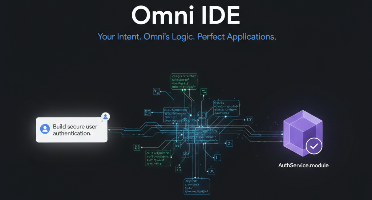

The Omni Interface converts traditional development environments into logically sound inference engines. Instead of raw code, users provide intent. The system translates that intent into proven logical proofs and composes them into validated, reusable modules. Each module is formally established and stored inside a growing composite library of sound components. Development Environments shifts from away from rewriting code to formalizing structured logic. Applications are built via modular composition, where every piece is verified and interoperable. This creates a scalable ecosystem of proven building blocks - assembling digital logic units rather that programming line by line.
This RFP seeks proposals for the development of an AI-native Development Environment (IDE) that improves the efficiency and accessibility of blockchain application development for the ASI:Chain.
Formalize the inference engine core: - Stabilize intent-to-logic transformation pipeline - Standardize modular composition format - Implement validation + registration into composite library - Establish internal consistency, traceability, and versioning model
A production-ready logical core capable of reliably generating and registering verified modules.
$16,000 USD
- ≥ 95% deterministic consistency in intent-to-logic transformation - All generated modules formally validated before registration - Zero unverified artifacts allowed into composite library - Versioned registry with full traceability across modules - Stable performance under defined load benchmark
Build the scalable compositional ecosystem: - Launch structured composite registry - Enable modular interoperability rules - Implement dependency resolution and compositional hierarchy - Provide assembly tooling for application construction
Applications can be built through modular logic assembly rather than raw implementation.
$12,000 USD
- Library contains a defined baseline set of reusable, interoperable composites - Dependency resolution functions without conflict in 100% of tested assemblies - Applications can be assembled end-to-end without manual code injection - Measurable reduction in raw code writing (target % defined internally) - Successful assembly of at least one production-grade application using only registered composites
Transform usability and ecosystem adoption: - Refine user interface for structured intent input - Provide SDK/API access to the inference engine - Enable collaborative composite contribution - Establish governance and extension model
A scalable, community-expandable platform where software creation becomes systematic logic composition.
$22,000 USD
- External users can generate and register composites without core team intervention - SDK/API adoption by initial pilot partners - Documented governance model for composite validation and acceptance - Repeatable onboarding process with defined time-to-productivity benchmark - Demonstrated multi-party contribution within the composite ecosystem
 Reviews & Ratings
Please create account or login to write a review and rate.
Check back later by refreshing the page.
© 2026 DEEP Funding

Join the Discussion (0)
Please create account or login to post comments.